Publishing a book involves more than writing and editing. Authors also need to understand the technical details that allow books to be distributed and sold worldwide.
One of the most important identifiers in publishing is the ISBN.
Many new writers ask questions like what an ISBN is, how to get an ISBN for a book, and whether they should choose a free vs paid ISBN.
Understanding ISBNs and book barcode requirements ensures that your book can be properly listed in bookstores, libraries, and online retailers.
If you’re new to independent publishing, you may want to first explore What is Self-Publishing?
Authors who want professional help with book production and publishing can also explore the services offered by Alpine Publishers.
What Is an ISBN?
An ISBN (International Standard Book Number) is a unique identification number assigned to a book.
This number helps retailers, distributors, and libraries track and catalog books globally.
Every ISBN contains information about:
- The publisher
- The book title and edition
- The format (paperback, hardcover, ebook)
In simple terms, an ISBN acts like a digital fingerprint for your book.
Without an ISBN, most retailers cannot properly list or distribute your book.
Why ISBNs Are Important for Authors
ISBNs play a crucial role in the book publishing ecosystem.
They allow books to be:
- Sold through bookstores
- Listed in global book databases
- Distributed to libraries
- Tracked by retailers
ISBNs also help ensure that each version of a book is uniquely identified.
For example, a paperback edition and an ebook edition require separate ISBNs.
Before reaching this stage, authors typically prepare their manuscript through editing and formatting.
Many writers rely on professional editing services and proofreading services to ensure their book is polished before publication.
You can learn more about these services in Professional Book Editing vs. Proofreading: Which One Do You Need?.
How to Get an ISBN for a Book
If you’re wondering how to get an ISBN for a book, the process is fairly straightforward.
Step 1: Determine Your Publishing Method
Your ISBN options depend on whether you are self-publishing or working with a publisher.
For independent authors, ISBNs are usually obtained from the official ISBN agency in their country.
To understand the overall publishing process, read How to Start a Publishing Company: A Step-by-Step Business Guide.
Step 2: Purchase or Register an ISBN
Authors can purchase ISBNs directly from official agencies.
The process typically involves:
- Creating an account with the ISBN provider
- Entering book information
- Paying the registration fee
Once registered, the ISBN becomes permanently associated with your book.
Step 3: Assign an ISBN to Your Book Format
Each book format requires its own ISBN.
Examples include:
| Format | Requires New ISBN |
| Paperback | Yes |
| Hardcover | Yes |
| Ebook | Sometimes |
| Audiobook | Yes |
This ensures that every edition of your book can be tracked individually.

Free vs Paid ISBN: Which Is Better?
Many self-publishing platforms offer free ISBNs.
However, authors often debate the pros and cons of free vs paid ISBN options.
Free ISBN
Advantages:
- No upfront cost
- Automatically assigned by the publishing platform
Disadvantages:
- Publishing platform listed as publisher
- Limited control over distribution
Paid ISBN
Advantages:
- The author owns the ISBN
- Full publishing control
- Ability to publish across multiple platforms
Disadvantages:
- Requires upfront investment
For authors building a long-term publishing brand, owning an ISBN is usually the preferred option.
What Are Book Barcode Requirements?
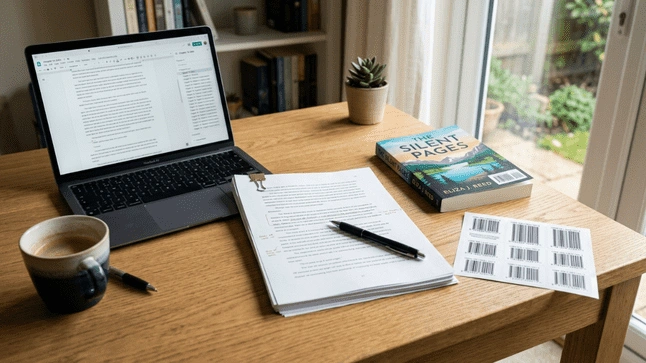
A book barcode is a machine-readable code printed on the back cover of a book.
This barcode allows retailers to scan and process books during sales.
Typical book barcode requirements include:
- ISBN encoded in the barcode
- Retail price embedded (optional)
- Clear placement on the back cover
Most barcodes appear in the bottom-right corner of the book’s back cover.
These barcodes allow books to be sold in bookstores, libraries, and retail outlets.
When Do You Need a Barcode?
Barcodes are required when selling printed books through retailers.
Examples include:
- Bookstores
- Online marketplaces
- Library distribution systems
Ebooks typically do not require barcodes because they are distributed digitally.
Before preparing your book for print distribution, ensure your manuscript is formatted correctly.
You can learn more in How to Format a Book for Kindle and Print: A Professional’s Checklist.
Proper formatting also requires choosing the correct trim size and layout, which is explained in Choosing the Right Book Dimensions: A Guide to Trim Sizes and Layouts.
ISBNs and Copyright Protection
While ISBNs help identify a book, they do not provide legal protection.
Authors must still register copyright to protect their intellectual property.
To learn how copyright works, read Protecting Your Work: How to Copyright a Book and Why It Matters.
Copyright ensures that your content remains legally protected and prevents unauthorized use.
ISBNs and Book Marketing
ISBNs also play a role in book marketing and distribution.
Books with ISBNs can be listed in major retail catalogs and global book databases.
This makes it easier for readers, bookstores, and distributors to discover your work.
Authors often use advance reader copies to promote books before official release.
These copies are known as ARCs, which are explained in What is a Galley Book? Understanding ARCs and Pre-Launch Copies.
ISBNs for Different Types of Books
Different types of books may require different publishing strategies.
For example, illustrated books and children’s books often require additional production considerations.
If you’re planning to publish illustrated content, see How to Publish a Children’s Book: From Illustrations to Distribution.
These books often require special formatting, image preparation, and layout design.

How ISBNs Affect Author Earnings
ISBN ownership can also influence how authors distribute their books and manage royalties.
Authors who own their ISBNs often have greater control over distribution channels and pricing strategies.
To understand how authors earn income from book sales, read How Much Do Authors Make Per Book? Royalties and Earnings in 2026.
Owning your ISBN can provide flexibility when expanding your publishing business.
Final Thoughts
Understanding what an ISBN is and how it works is essential for every self-published author.
ISBNs allow books to be tracked, sold, and distributed globally, while barcodes enable retailers to process sales efficiently.
By learning how to get an ISBN for a book and understanding free vs paid ISBN options, authors can make smarter publishing decisions.
If you need expert assistance with editing, publishing, or preparing your book for distribution, you can explore the services offered by Alpine Publishers or reach out through their contact page.