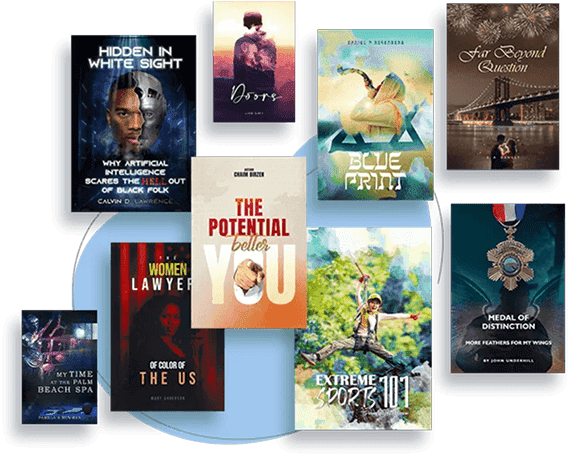
Self-publishing a book in today’s market requires much more than simply uploading a manuscript and waiting for readers to discover it.
Self-publishing has matured significantly. In 2026, it is a legitimate, competitive, and often financially rewarding path for authors across every genre. But it is also a process with real technical requirements that catch many first-time self-publishers off guard.
This guide covers the practical, technical side of self-publishing a book — the stuff that goes beyond just writing and uploading. Think of it as the manual nobody gives you when you decide to do this yourself.

What Self-publishing Actually Requires
Self-publishing means you are the publisher. That sounds simple, but it means taking on responsibilities that a traditional publishing house would normally handle through teams of specialists. Many authors researching self publishing tips are surprised by how many technical responsibilities fall directly on them.
| Responsibility | Who Handles It in Traditional Publishing | Who Handles It When Self-Publishing |
| Editing | Publisher’s editorial team | The author works independently |
| Cover design | Publisher’s design team | The author works independently |
| Interior formatting | Publisher’s production team | Author or hired formatter |
| ISBN and metadata | Publisher | The author purchases and manages |
| Distribution | Publisher’s distribution network | The author sets up through platforms |
| Marketing | Publisher’s marketing team | The author manages their own budget |
| Royalty accounting | Publisher handles and reports | The platform reports directly to the author |
Step 1: Edit Before You Do Anything Else
This cannot be overstated. Self-published books that underperform almost always share one characteristic: they weren’t properly edited before publication.
- The minimum editing a self-published book needs before going live:
- Developmental edit or structural review: Does the book work as a whole?
- Line edit: Is the writing clear, consistent, and engaging throughout?
- Copyedit: Are grammar, punctuation, and spelling correct?
- Proofread and final read for any remaining errors in the formatted file
You can reduce costs by doing some of this yourself, but a professional copyedit at a minimum is strongly recommended before any book is published publicly.
Step 2: Cover Design that Works
Your cover sells your book. This is not an exaggeration.
A self-publishing tip that experienced indie authors repeat constantly: never underinvest in cover design. Readers make split-second judgments based on covers. A cover that doesn’t fit genre conventions, looks amateur, or simply doesn’t stand out in thumbnail form will suppress sales regardless of how good the writing is.
What makes a good self-published cover:
- It fits established visual conventions for its genre; romance covers look like romance, thrillers look like thrillers
- It reads clearly as a small thumbnail on a screen, which is how most readers will first see it
- The title and author name are legible at every size
- The design is professionally executed, not clip-art assembled
Budget options exist, but the cheapest option is rarely the right one for a cover. This is one area where spending more almost always pays off. Authors serious about self-publishing a book should treat cover design as a professional investment rather than an afterthought.
Step 3: Interior Formatting
Your manuscript file needs to be formatted correctly for each edition you plan to publish. Print and ebook formats have entirely different requirements. Authors unfamiliar with formatting standards should also review how to format a book for publishing before preparing final files.
Print Formatting Requirements
- Trim size: the physical dimensions of the book must be chosen and formatted to match
- Margins, interior margins for a print book are larger on the gutter side to account for binding
- Fonts, standard readable serif fonts are used for body text in print books
- Chapter headers, page numbers, and running headers must be consistently formatted
- Images must be high resolution for print, 300 DPI minimum
- File format: Most print platforms require a PDF for the interior
Ebook Formatting Requirements
- Ebooks use reflowable text that adjusts to screen size, fixed layouts from print don’t translate
- Chapter navigation must be set up through a linked table of contents
- Images should be optimized for the screen at 72 DPI
- File formats: EPUB is the standard for most platforms; Amazon KDP accepts EPUB or DOCX
- Special characters, fonts, and complex layouts can break ebook rendering and need careful handling
Tools like Vellum (Mac only), Atticus, or Reedsy’s formatting tool handle both print and ebook formatting with reasonable learning curves. Adobe InDesign offers the most professional results for print, but has a steeper learning curve and subscription cost. Many modern self-publishing tips now focus heavily on formatting quality because readers quickly notice poorly formatted books.

Step 4: ISBN and Metadata
Getting an ISBN
An ISBN is required for most distribution channels. In the US, ISBNs are purchased through Bowker at myidentifiers.com. Each format of your book, hardcover, paperback, or ebook, requires a separate ISBN. Authors new to publishing often benefit from understanding ISBNs and barcodes before choosing distribution options.
| ISBN Option | Cost | Ownership | Recommended For |
| Bowker (US) | $125 per ISBN, $295 for 10 | The author owns the ISBN | Most self-publishers |
| Amazon KDP free ISBN | Free | KDP listed as publisher of record | Amazon-only distribution |
| IngramSpark free ISBN | Free with setup fee | Ingram is listed as the publisher | Wide distribution of authors |
Metadata Matters More Than Most Authors Realize
Metadata is the information attached to your book in distribution databases — title, author, description, categories, keywords, and more. Poor metadata means fewer readers discover your book through search and browsing.
- Write a book description that reads like back cover copy, compelling, genre-appropriate, and keyword-aware
- Choose your BISAC categories carefully; these determine where your book appears in retail databases
- Select keywords that match what real readers search for when looking for books like yours
Step 5: Choosing Your Distribution Platforms
| Platform | Best For | Royalty Rate | Key Advantage |
| Amazon KDP | Ebook and print, Amazon marketplace | 35% or 70% ebook, 60% print | Largest single retailer for books |
| IngramSpark | Wide print distribution to bookstores and libraries | Varies by price and format | Access to 40,000+ retailers globally |
| Draft2Digital | Ebook distribution to multiple retailers | 60% of the list price | Easy multi-retailer distribution |
| Smashwords | Ebook distribution, library channels | 60% to 80% | Strong library distribution |
| PublishDrive | Global ebook distribution | Flat fee or revenue share | Strong international reach |
Most serious self-publishing authors use Amazon KDP and IngramSpark together. KDP covers the Amazon marketplace, and IngramSpark covers everywhere else, including physical bookstores and libraries.
Step 6: Pricing Your Book
Pricing strategy affects both revenue and discoverability. Platforms like Amazon factor price into their recommendation algorithms.
- Ebooks in most genres price between $2.99 and $9.99 — the 70% royalty tier on Amazon applies in this range
- Print books are priced based on production costs plus desired margin — use each platform’s royalty calculator to find viable price points
- Pricing too low can signal low quality; pricing too high reduces impulse purchases
- Permafree first books in a series can drive series sales even with zero revenue on book one
Self-publishing Tips that Actually Make a Difference
- Publish in a series wherever possible, series readers buy more books and are more loyal
- Build your email list before your book launches, not after
- Get advance reviews before launch day, books with reviews convert better than books without
- Use Amazon’s look inside feature to your advantage; your opening pages are your sample and your sales pitch
- Treat your book description as ad copy, not a summary
- Update your metadata regularly based on what’s working in your genre

Final Thoughts
Self-publishing a book in 2026 gives authors more control, higher royalties, and a faster time to market than any other publishing route. But it works best when approached with the same professionalism a traditional publisher would bring to your book.
The technical side of self-publishing is learnable. Editing, cover design, formatting, metadata, and distribution all have clear best practices. Following them is the difference between a book that sells and one that doesn’t.
Alpine Publishers works with authors navigating every part of this process. If you want expert support on any stage of your self-publishing journey, we’re here.
FAQs
1. What do I need to self-publish a book in 2026?
At minimum, you need a completed and edited manuscript, a professional cover design, a correctly formatted interior file for print and ebook, an ISBN, and accounts on your chosen distribution platforms. Marketing support and a launch plan significantly improve your chances of commercial success.
2. What is the best platform for self-publishing a book?
Most authors use Amazon KDP for ebook and print distribution on Amazon, and IngramSpark for wider distribution, including bookstores and libraries. Using both together gives the broadest possible reach.
3. How much does it cost to self-publish a book?
Costs vary widely depending on the services you hire. A realistic minimum budget for a professionally produced self-published book in 2026, including editing, cover design, and formatting, ranges from around $1,500 to $5,000 or more, depending on book length and service quality.
4. Do I need an ISBN to self-publish?
You need an ISBN for most distribution channels outside of Amazon. In the US, ISBNs are purchased through Bowker. Amazon KDP and IngramSpark offer free ISBNs, but using them lists those companies as the publisher of record rather than your own publishing imprint.
5. How long does it take to self-publish a book?
Once your manuscript is fully edited and your cover and formatting are ready, uploading and publishing can happen within days. Most authors spend three to twelve months on pre-publication preparation before their book is genuinely ready to go live competitively.